---
title: How Political Instability Is Reshaping Copper Prices
description: Tariffs, sanctions, and supply chain disruptions are driving copper price volatility. Here is why the long-term case for physical copper ownership has never been stronger.
image: https://blog.kiloreserve.com/hubfs/Copper-Abstract-Texture-Gradient_001.jpg
---
[Skip to main content](https://blog.kiloreserve.com/political-instability-copper-investor-advice#main)
[ ](https://www.kiloreserve.com)
- [Products](https://kiloreserve.com/products/)
- [How It Works](https://kiloreserve.com/how-it-works/)
- [Resources](https://explore.kiloreserve.com/)
- [About Us](https://kiloreserve.com/about-us/)
- [FAQ](https://kiloreserve.com/faq/)
- [Connect With Us](https://kiloreserve.com/connect/)
Open main navigation
Close main navigation
- [Products](https://kiloreserve.com/products/)
- [How It Works](https://kiloreserve.com/how-it-works/)
- [Resources](https://explore.kiloreserve.com/)
- [About Us](https://kiloreserve.com/about-us/)
- [FAQ](https://kiloreserve.com/faq/)
- [Connect With Us](https://kiloreserve.com/connect/)
- [Log In](https://account.kiloreserve.com/login)
[Create My Account](https://account.kiloreserve.com/register)
[Log In](https://account.kiloreserve.com/login)
[Create My Account](https://account.kiloreserve.com/register)
# How Political Instability Is Reshaping Copper Prices — And What Investors Should Do
# How Political Instability Is Reshaping Copper Prices — And What Investors Should Do

by [Allen Cates](https://blog.kiloreserve.com/author/allen-cates)
April 29, 2026
##### Every time a new tariff announcement drops, copper moves. Every time a shipping lane goes dark, copper moves. Every time a government shifts policy on critical minerals, copper moves.
That is not a coincidence. Copper is not just an industrial metal — it is a geopolitical one. And right now, the forces reshaping global trade are putting copper at the center of one of the most complex supply and demand dynamics in a generation.
The short version: political instability creates volatility. It does not change the long-term story. And for investors who understand the difference, that volatility is an opportunity — not a reason to stay on the sidelines.
---
### Why Copper Is a Geopolitical Metal (Not Just an Industrial One)
Copper has been essential to human civilization for over 10,000 years. But the last decade has fundamentally changed what copper means to the global economy — and to global politics.
The metal is now the backbone of the energy transition. Every electric vehicle contains roughly four times the copper of a conventional combustion engine. Every solar array, every wind turbine, every AI data center, every grid upgrade runs on it. Demand has nearly quadrupled over the last 50 years, and the sectors driving the next wave of growth — EVs, AI infrastructure, renewable energy, and defense manufacturing — are all copper-intensive.
That demand story is well established. What has changed is the supply side.
In November 2025, the U.S. government added copper to its list of critical minerals, defining it as essential for national security, economic stability, and supply chain resilience. The European Union made the same designation in 2023. When governments start calling a commodity strategically critical, it signals that the competition for supply is no longer just commercial. It is political. [See Our Products →](https://kiloreserve.com/products/)
## By The Numbers
4X
Copper content in an EV vs. a conventional vehicle.
~24%
Chile's share of global copper mine output in 2024.
51%
China's share of global copper smelting capacity.
~17%
Share of global refined copper now from secondary (recycled) sources.
Source: International Institute for Strategic Studies, New Constraints in the Global Copper Market, January 2026
### The Three Forces Driving Copper Price Volatility Right Now
Copper hit an all-time high in early 2026. Since then, prices have pulled back as markets processed a surge of pre-tariff stockpiling and began weighing near-term macro headwinds and are now moving back towards the highs.
But the volatility is not random. It is being driven by three distinct forces — each of which tells a different part of the same story.
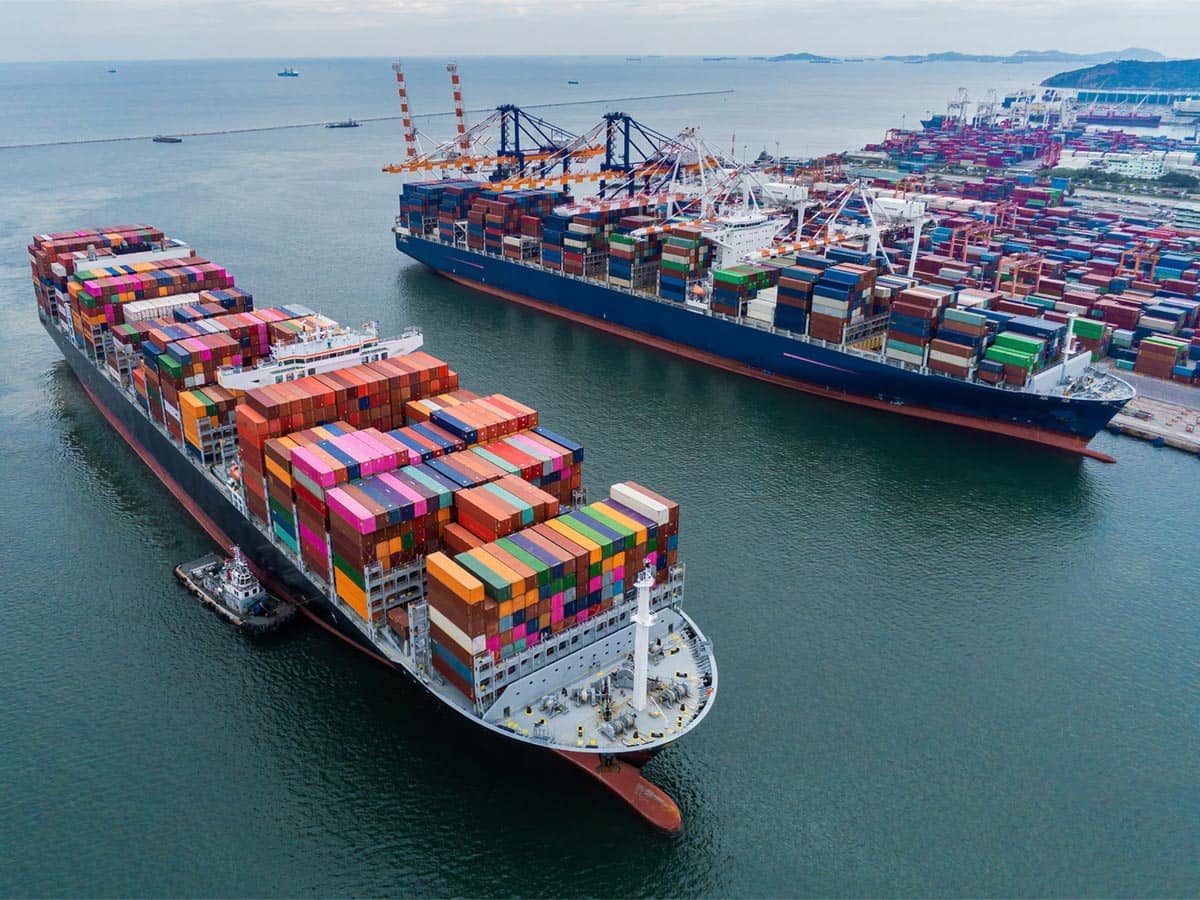
#### Tariffs and Trade War Escalation
Anticipation of new U.S. tariffs on copper drove American industrial buyers to stockpile aggressively in late 2025. The front-loading was significant enough to drain LME warehouses and create an artificial scarcity premium that helped push prices to record highs.
When that pre-tariff demand normalized, prices corrected. That is textbook volatility: political uncertainty amplifying the natural swings of a supply-constrained market. The tariff itself does not destroy copper demand — it changes when and where it is purchased. The underlying need for copper in manufacturing, construction, and energy infrastructure does not disappear because of a trade policy change.
#### The Strait of Hormuz: The Sulfur Constraint Most Investors Are Missing
This is the angle most investors are not watching and it matters more than the headline price movements suggest.
About 20% of global copper supply relies on a process that uses sulphuric acid to leach copper from oxide ores. The sulfur required to produce that acid has to come from somewhere. Roughly 50% of global seaborne sulfur supply transits the Strait of Hormuz.
When Hormuz is disrupted, sulfur shipments tighten. Sulphuric acid prices have already risen past $500 per tonne in recent weeks. Robert Friedland, founder of Ivanhoe Mines and operator of the Kamoa-Kakula copper complex in the DRC, Africa's largest copper smelter, issued **[a direct warning in April 2026](https://www.mining.com/prolonged-hormuz-strait-closure-would-have-profound-impact-on-mining-friedland/)**:
*"If the closure of the Strait of Hormuz continues, we are especially concerned about the availability of precursor materials necessary for the mining industry to continue operating. A second-derivative effect will be on global copper production due to the shortage of the world's most important industrial chemical, sulphuric acid." — Robert Friedland, Co-Chairman, Ivanhoe Mines | Q1 2026 Production Report, April 2026*
The pressure is compounding. China — the world's second-largest exporter of sulphuric acid — announced a ban on sulphuric acid exports effective May 1, 2026. Red Cloud Securities commodities strategist Kenneth Hoffmann put it plainly: copper will be hit the hardest.
This is not a commodity story. It is a supply chain story. And it is exactly the kind of second-order risk that does not show up in the price of a copper ETF until it is already priced in.

#### Mine Disruptions and Structural Supply Tightness
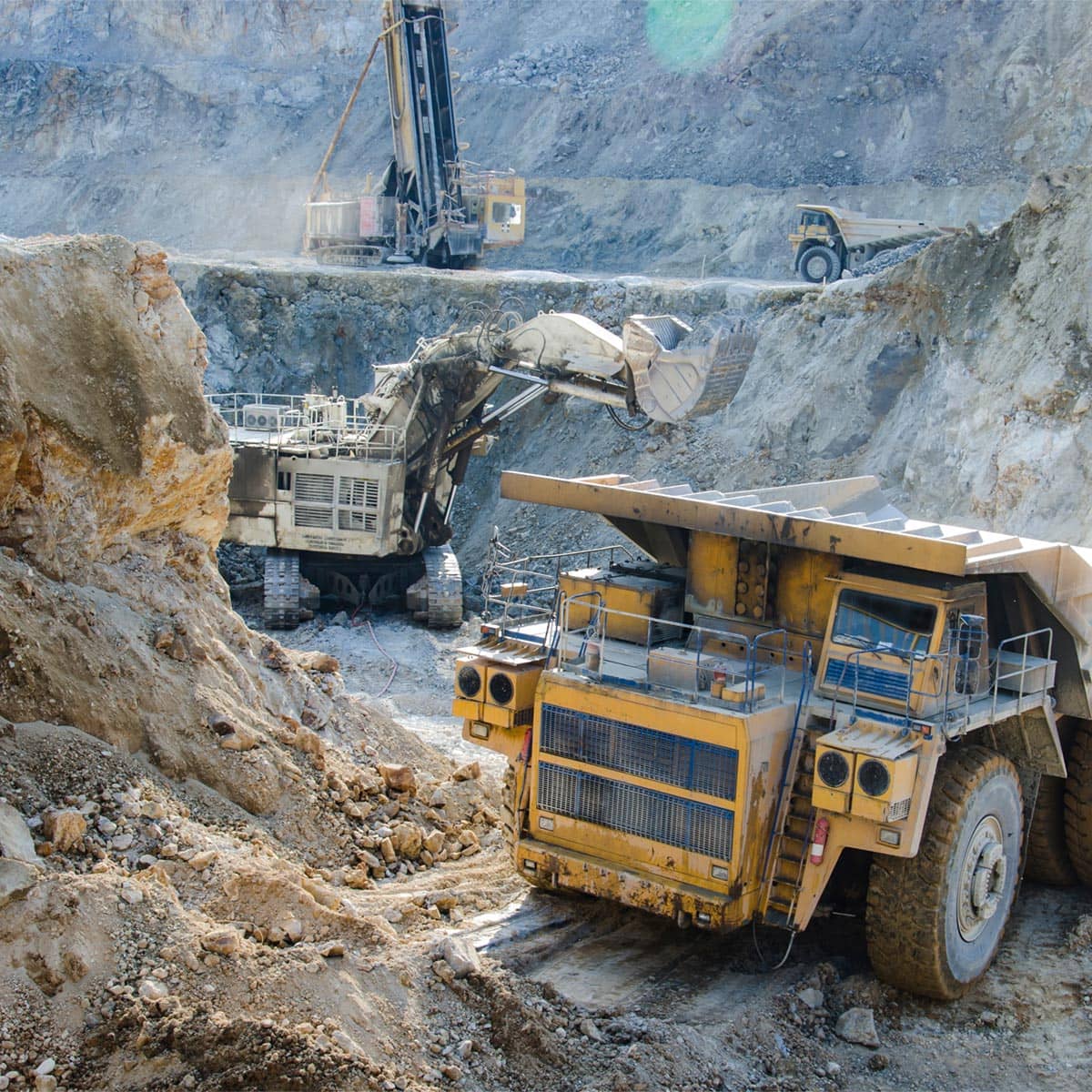
Political and environmental instability at the mine level has been a persistent drag on copper supply. In 2025, seismic flooding shut the Kamoa-Kakula mine in the DRC, a tunnel collapse hit El Teniente in Chile, and a mudslide damaged Grasberg in Indonesia — the world's second-largest copper mine. On average, 6 to 8 percent of global copper mine capacity is offline in any given year.
The downstream effect: treatment and refining charges — the fees smelters charge to process copper ore — turned negative in 2025 for the first time, signaling that miners could not get enough ore to smelters at profitable rates. Chinese smelters, which account for 51% of global smelting capacity, said they would target a 10% production cut in 2026.
The International Copper Study Group projected a near-term refined copper surplus for 2025-26 driven in part by tariff-accelerated stockpiling. However, treatment and refining charge data, smelter production cuts, and compounding mine disruptions signal that structural tightness is building. **[The deficit widely projected for the 2030s is being shaped, and potentially accelerated, by the conditions developing right now.](https://www.iiss.org/globalassets/media-library---content--migration/files/publications/strategic-comments-delta/2026/01/sc-32-01-new-constraints-in-the-global-copper-market.pdf)**
### The Long-Term Story Has Not Changed — If Anything, It Is Stronger
**Volatility is noise. Supply and demand fundamentals are signal.**
Every force driving short-term price swings — tariffs, Hormuz disruptions, trade policy uncertainty — is operating on top of a structural demand story that none of those forces can alter. The global energy transition still requires copper. AI infrastructure still requires copper. Defence spending still requires copper. The grid upgrades powering all of it still require copper.
Those demand drivers are not sensitive to the political cycle. EVs do not stop requiring copper because of a tariff. Data centers do not stop requiring copper because of a Hormuz closure. If anything, the instability accelerates the case for supply security — which is why governments on both sides of the Atlantic have classified copper as a critical mineral in the first place.
Supply, meanwhile, is not keeping pace. Global copper mine output grew 2.7% annually between 2021 and 2024 — not enough to meet the demand growth coming from electrification and AI. The structural deficit projected for the 2030s is being shaped right now by the combination of mine disruptions, smelter constraints, and the end of the easy-to-mine ore era.
Short-term volatility is real. It is expected. It does not change the long-term case. For investors with a multi-year horizon, the ebbs and flows of a politically disrupted market are part of the landscape — not a reason to exit it.
## The Kilo Reserve Perspective
#### Regardless of short-term volatility, the demand and supply dynamics underpinning copper remain, in our view, among the most compelling in the commodities space. The structural case is growing stronger.
### Why Paper Copper Does Not Protect You the Way Physical Copper Does
Most retail investors access copper through ETFs, mining stocks, or futures contracts. Those instruments track copper prices — but they also carry risks that have nothing to do with the metal itself.
A copper ETF can have tracking error. A mining stock carries the operational risk of the company running the mine — labor disputes, permitting delays, management decisions, quarterly earnings pressure. A futures contract has expiration dates and roll costs. None of them give you ownership of the physical metal.
When a Hormuz disruption tightens sulfuric acid supply, that is a physical supply chain event. When a mine in the DRC floods, that is a physical supply event. The price of a copper ETF may eventually reflect that — but it moves on financial market sentiment, liquidity conditions, and investor positioning first. The dislocation between paper price and physical reality is exactly where investors get caught.
Physical copper ownership removes that layer of intermediation. You own the metal. No fund manager risk, no miner operational risk, no rolling futures risk. When the physical market tightens, you hold the thing that is in demand. **[Learn how Kilo Reserve Works →](https://kiloreserve.com/how-it-works/)**
### What Physical Copper Ownership Actually Looks Like
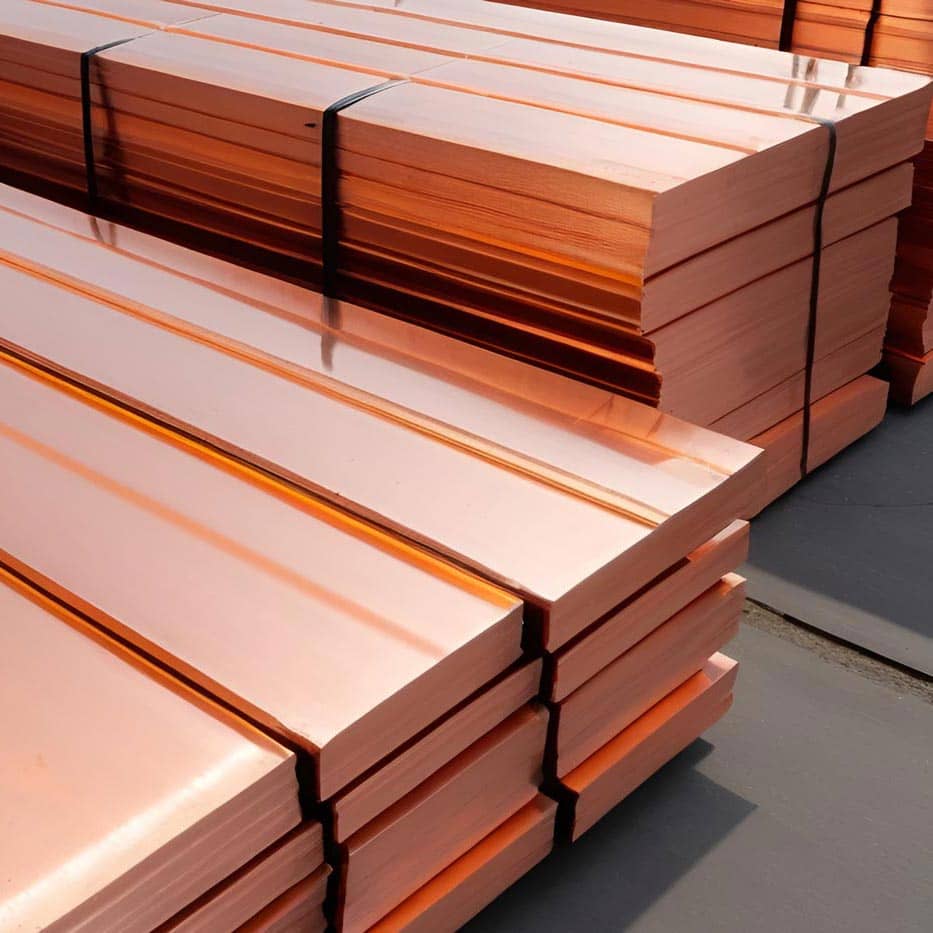
**Kilo Reserve is the first US based platform giving retail investors direct, auditable ownership of physical copper — not a fund, not a futures contract, not a miner stock. Physical copper cathodes, COMEX/LME investment grade, held in an insured third-party facility.**
Here is what you own when you open a Kilo Reserve account:
- COMEX/LME-grade copper cathodes — the same institutional standard used by major commodity traders
- Pooled ownership, 100% backed by physical metal on a one-to-one basis
- Third-party vault storage, audited independently, insured 24/7
- Real-time tracking of your holdings through a secure online dashboard
- The ability to sell at any time at prevailing market prices,subject to standard settlement terms or request physical redemption
**There are no ETF fees, no miner risk, no counterparty exposure. Just copper.**
## Ready to own physical copper?
Open your Kilo Reserve account. Identity verification typically takes about five minutes. Your copper is allocated and stored the moment your first purchase is confirmed.
[Create My Account](https://account.kiloreserve.com/register)
[Not Ready? Book A Consultation](https://kiloreserve.com/connect/)
### What Should Investors Do Right Now?
#### The honest answer: it depends on your time horizon.
If you are trying to trade the volatility, positioning around Hormuz news flow, guessing where tariffs land, that is a full-time job, and you are competing against hedge funds with real-time data. That is not what physical copper ownership is for.
If your horizon is three to five years or longer, the calculus is different. The structural demand story is intact. The supply constraints are deepening. Every major economy that cares about energy security, AI infrastructure, and defence capacity is competing for the same metal. The volatility you are watching right now is what **[long-term entry points](https://blog.kiloreserve.com/should-you-be-investing-in-physical-copper)** are made of.
Physical copper ownership through Kilo Reserve is designed for that investor. Not for someone chasing a trade. For someone who wants real exposure to a real asset that the world genuinely needs more of — and who wants that exposure without a fund manager, a futures roll, or a mining company balance sheet standing between them and the metal.
The ebbs and flows are part of the landscape. The long-term direction of copper demand is not in question.
## Frequently Asked Questions
##### How does political instability affect copper prices?
Political instability increases volatility — meaning larger price swings in both directions — because it creates uncertainty about future supply and demand conditions. Tariffs, sanctions, and shipping disruptions can all affect how copper moves through the global supply chain. Importantly, instability affects the timing and direction of short-term price moves, but it does not change the underlying structural demand for copper driven by electrification, AI infrastructure, and the energy transition.
##### Why is copper more sensitive to geopolitical risk than gold or silver?
Unlike gold or silver, copper has dominant industrial utility — it is the primary conductor in EVs, power grids, data centers, and defence systems. That means its price is directly tied to physical production and physical supply chains. When a mine floods, a shipping lane closes, or a key production input like sulphuric acid becomes scarce, the effect on copper is immediate and measurable. Gold can be held as a financial instrument largely detached from industrial use. Copper cannot.
##### How do U.S. tariffs affect copper supply and pricing?
U.S. tariffs on refined copper create incentives for American industrial buyers to stockpile metal before the tariff takes effect, which can spike short-term demand and drain available inventory. Once the stockpiling wave normalizes, prices typically correct. The tariff does not destroy copper demand — it shifts the timing and geography of purchases. Long-term, tariffs can also incentivize domestic production investment, which takes years to materialize.
##### Is physical copper a good long-term investment despite short-term volatility?
The structural case for copper is built on real and growing demand: electric vehicles, AI data centers, grid infrastructure, and defence production all require significant copper inputs. Supply is not growing fast enough to meet that demand, and mine disruptions are accelerating the timeline toward a structural deficit. Short-term volatility driven by political events is real and expected — it does not alter the long-term fundamentals. Physical ownership through a platform like Kilo Reserve allows investors to hold the asset through that volatility without the added risks of paper instruments.
##### How can a retail investor own physical copper directly?
Create a Kilo Reserve account, complete a quick identity verification (about three minutes), fund your account, and purchase copper by the kilogram. Your copper is immediately allocated and stored in an insured, audited COMEX / LME facility. Kilo Reserve is the first American platform giving retail investors direct, auditable ownership of investment-grade physical copper — no ETFs, no futures, no intermediaries.
##### Is a Kilo Reserve copper investment IRA-eligible?
Kilo Reserve copper investments are not currently IRA-eligible. If you are evaluating copper as part of a broader retirement or long-term portfolio strategy, our team can help you understand how physical copper ownership fits alongside other holdings. Book a consultation to discuss your situation.
## Not ready to open an account today?
Talk to our team and get your questions answered before you invest.
[Book a Consultation](https://kiloreserve.com/connect/)
###### Tags:
[copper investing,](https://blog.kiloreserve.com/tag/copper-investing) [physical copper,](https://blog.kiloreserve.com/tag/physical-copper) [secure investment,](https://blog.kiloreserve.com/tag/secure-investment) [investment,](https://blog.kiloreserve.com/tag/investment) [wealth building](https://blog.kiloreserve.com/tag/wealth-building)

Post by [Allen Cates](https://blog.kiloreserve.com/author/allen-cates)
Apr 28, '26
Allen Cates is a financial strategist and operator with more than two decades of experience in institutional finance, capital strategy, and business leadership. After earning his MBA from Manchester Business School in the UK, Allen held senior roles at Bank of America and PNC Bank, where he led complex pricing, trading, and strategy initiatives across multi-billion-dollar portfolios. His work integrated analytics, risk management, and business planning at scale. Following his corporate career, Allen acquired and operated a multi-location accessibility franchise, applying his institutional experience to frontline execution in operations, finance, and customer strategy. As Co-Founder and CEO of Kilo Reserve, Allen leads vision, operations, and the investor experience. He brings institutional discipline to a platform built for long-term, real asset ownership.
[](https://www.kiloreserve.com)
Kilo Reserve™ is a trademark of Kilo Reserve LLC. All rights reserved 2026.
[Important Notices](https://www.kiloreserve.com/important-notices) | [Privacy Policy](https://www.kiloreserve.com/privacy) | [Terms and Conditions](https://www.kiloreserve.com/terms-conditions)
-
-
-
- [](https://twitter.com/kiloreserve)
- [](https://truthsocial.com/kiloreserve)
- [](https://bsky.app/profile/kiloreserve.bsky.social)
- [](https://www.tiktok.com/@kiloreserve)
-
```json
{
"@context" : "https://schema.org",
"@type" : "BlogPosting",
"author" : {
"@type" : "Person",
"name" : "Allen Cates",
"url" : "https://blog.kiloreserve.com/author/allen-cates"
},
"dateModified" : "2026-04-29T13:48:41.698Z",
"datePublished" : "2026-04-28T19:45:04.000Z",
"headline" : "How Political Instability Is Reshaping Copper Prices",
"image" : [ "https://blog.kiloreserve.com/hubfs/Copper-Abstract-Texture-Gradient_001.jpg" ],
"mainEntityOfPage" : {
"@id" : "https://blog.kiloreserve.com/political-instability-copper-investor-advice",
"@type" : "WebPage"
},
"publisher" : {
"@type" : "Organization",
"logo" : {
"@type" : "ImageObject",
"url" : "https://blog.kiloreserve.com/hubfs/KR_Logo-Horizontal_Color.jpg"
},
"name" : "Kilo Reserve"
}
}
```
```json
{
"@context" : "https://schema.org",
"@type" : "Organization",
"address" : {
"@type" : "PostalAddress",
"addressCountry" : "US",
"addressLocality" : "Charlotte",
"addressRegion" : "NC",
"postalCode" : "28226",
"streetAddress" : "7300 Carmel Executive Park Dr"
},
"description" : "Invest in physical copper with Kilo Reserve. Securely stored, audited, and accessible, it’s the smart way to diversify. Start building your portfolio today.",
"email" : "info@kiloreserve.com",
"image" : "https://kiloreserve.com/wp-content/uploads/2025/09/KR_Logo-Horizontal_Color.webp",
"logo" : "https://kiloreserve.com/wp-content/uploads/2025/09/KR_Logo-Horizontal_Color.webp",
"name" : "Kilo Reserve",
"sameAs" : [ "https://www.linkedin.com/company/kiloreserve/", "https://www.facebook.com/kiloreserve/", "https://www.instagram.com/kiloreserve/", "https://x.com/kiloreserve", "https://truthsocial.com/@kiloreserve", "https://bsky.app/profile/kiloreserve.bsky.social", "https://www.tiktok.com/@kiloreserve", "https://www.youtube.com/@kiloreserve" ],
"telephone" : "1-866-593-2815",
"url" : "https://kiloreserve.com"
}
```
```json
{
"@context" : "https://schema.org",
"@type" : "Organization",
"logo" : "https://kiloreserve.com/wp-content/uploads/2025/07/kilo-reserve_logo_white.png",
"name" : "Kilo Reserve",
"sameAs" : [ "https://www.linkedin.com/company/kiloreserve/", "https://www.facebook.com/kiloreserve/", "https://www.instagram.com/kiloreserve/", "https://x.com/kiloreserve", "https://truthsocial.com/@kiloreserve", "https://bsky.app/profile/kiloreserve.bsky.social", "https://www.tiktok.com/@kiloreserve", "https://www.youtube.com/@kiloreserve" ],
"url" : "https://kiloreserve.com/"
}
```
```json
{
"@context" : "https://schema.org/",
"@type" : "BreadcrumbList",
"itemListElement" : [ {
"@type" : "ListItem",
"item" : "https://kiloreserve.com/",
"name" : "Kilo Reserve",
"position" : 1
}, {
"@type" : "ListItem",
"item" : "https://blog.kiloreserve.com/",
"name" : "Kilo Reserve Blog",
"position" : 2
}, {
"@type" : "ListItem",
"item" : "https://blog.kiloreserve.com/political-instability-copper-investor-advice/",
"name" : "How Political Instability Is Reshaping Copper Prices | Kilo Reserve",
"position" : 3
} ]
}
```
```json
{
"@context" : "https://schema.org",
"@type" : "FAQPage",
"mainEntity" : [ {
"@type" : "Question",
"acceptedAnswer" : {
"@type" : "Answer",
"text" : "Political instability increases volatility — meaning larger price swings in both directions — because it creates uncertainty about future supply and demand conditions. Tariffs, sanctions, and shipping disruptions can all affect how copper moves through the global supply chain. Importantly, instability affects the timing and direction of short-term price moves, but it does not change the underlying structural demand for copper driven by electrification, AI infrastructure, and the energy transition."
},
"name" : "How does political instability affect copper prices?"
}, {
"@type" : "Question",
"acceptedAnswer" : {
"@type" : "Answer",
"text" : "Unlike gold or silver, copper has dominant industrial utility — it is the primary conductor in EVs, power grids, data centers, and defence systems. That means its price is directly tied to physical production and physical supply chains. When a mine floods, a shipping lane closes, or a key production input like sulphuric acid becomes scarce, the effect on copper is immediate and measurable. Gold can be held as a financial instrument largely detached from industrial use. Copper cannot."
},
"name" : "Why is copper more sensitive to geopolitical risk than gold or silver?"
}, {
"@type" : "Question",
"acceptedAnswer" : {
"@type" : "Answer",
"text" : "U.S. tariffs on refined copper create incentives for American industrial buyers to stockpile metal before the tariff takes effect, which can spike short-term demand and drain available inventory. Once the stockpiling wave normalizes, prices typically correct. The tariff does not destroy copper demand — it shifts the timing and geography of purchases. Long-term, tariffs can also incentivize domestic production investment, which takes years to materialize."
},
"name" : "How do U.S. tariffs affect copper supply and pricing?"
}, {
"@type" : "Question",
"acceptedAnswer" : {
"@type" : "Answer",
"text" : "The structural case for copper is built on real and growing demand: electric vehicles, AI data centers, grid infrastructure, and defence production all require significant copper inputs. Supply is not growing fast enough to meet that demand, and mine disruptions are accelerating the timeline toward a structural deficit. Short-term volatility driven by political events is real and expected — it does not alter the long-term fundamentals. Physical ownership through a platform like Kilo Reserve allows investors to hold the asset through that volatility without the added risks of paper instruments."
},
"name" : "Is physical copper a good long-term investment despite short-term volatility?"
}, {
"@type" : "Question",
"acceptedAnswer" : {
"@type" : "Answer",
"text" : "Create a Kilo Reserve account, complete a quick identity verification (about three minutes), fund your account, and purchase copper by the kilogram. Your copper is immediately allocated and stored in an insured, audited COMEX / LME facility. Kilo Reserve is the first American platform giving retail investors direct, auditable ownership of investment-grade physical copper — no ETFs, no futures, no intermediaries."
},
"name" : "How can a retail investor own physical copper directly?"
}, {
"@type" : "Question",
"acceptedAnswer" : {
"@type" : "Answer",
"text" : "Kilo Reserve copper investments are not currently IRA-eligible. If you are evaluating copper as part of a broader retirement or long-term portfolio strategy, our team can help you understand how physical copper ownership fits alongside other holdings. Book a consultation to discuss your situation."
},
"name" : "Is a Kilo Reserve copper investment IRA-eligible?"
} ]
}
```