
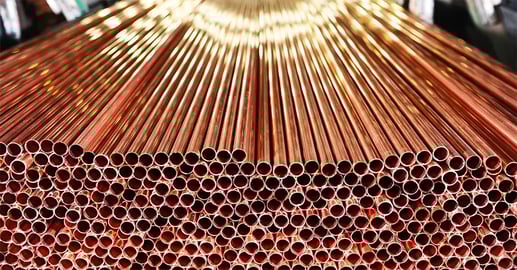
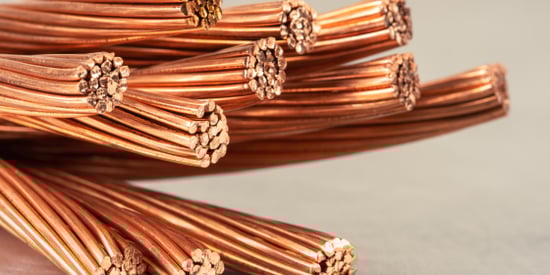
Physical copper is now a direct-ownership investment for individual investors — not a fund, not a futures contract, but actual copper cathodes stored in an institutional vault. Kilo Reserve is the first platform purpose-built to give individual investors 1:1 access to physical copper at the same purity grade used in global industrial markets.
For decades, investors who wanted copper exposure had two options: buy shares in a copper mining company, or purchase a copper ETF. Both give you price exposure. Neither gives you the metal. Kilo Reserve changes that — and for a specific type of investor, that distinction matters enormously.
Why Copper, and Why Now?
Copper is the material backbone of the global energy transition. Three structural forces are driving demand:
- Electrification: Every electric vehicle requires 2–4x more copper than an internal combustion engine. Global EV adoption is accelerating across every major economy.
- Grid infrastructure: Renewable energy grids, battery storage systems, and AI-driven data centers are all copper-intensive. The International Energy Agency projects global copper demand will nearly double by 2040.
- Supply constraints: No major copper mine has come online at scale in over a decade. The structural supply gap is widening — demand is rising while new supply is not keeping pace.
This is not a short-term trade thesis. It is a decade-long structural shift, which is why investors building long-horizon, real asset portfolios are now treating physical copper as a strategic allocation — not a speculation.
Who Should Invest in Physical Copper?
Kilo Reserve is designed for four types of investors:
| Investor Type | Why Physical Copper Fits | What to Know |
| Real asset investors | Investors already understand physical assets but do not have exposure to copper and other industrial metals. | Physical metals hold value through the test of time |
| Inflation-conscious investors | Physical copper is a tangible, scarce asset. It holds intrinsic industrial value that cannot be printed, diluted, or defaulted on. | Long-horizon hold; not a short-term hedge |
| High net worth portfolio diversifiers | Copper behaves differently from stocks, bonds, and even gold — low correlation to traditional markets, with industrial demand as its price driver. | Best as a percentage of a real asset allocation based on the individual’s financial plan |
| Macro-aware investors | Electrification demand for copper is structural — driven by policy, technology, and infrastructure spending across every major economy. | Buy conviction, not just price exposure |
What Are the Risks of Investing in Physical Copper?
Physical copper is not for every investor. Understanding the risks is as important as understanding the opportunity.
- Price volatility: Copper is a globally traded commodity. Prices fluctuate based on industrial demand, currency movements, and macroeconomic conditions. Kilo Reserve does not guarantee returns — your copper is priced off the market rate.
- Liquidity vs. equities: Physical copper is more liquid than real estate but less immediately liquid than a stock. Kilo Reserve provides live posted sell prices and same-day sale processing — but copper investing is best approached as a medium-to-long-term hold.
- Storage and management fees: Storage, insurance, and platform management involve costs. Kilo Reserve is transparent about its fee structure — review current pricing at kiloreserve.com before investing.
- Concentration risk: Like any single-commodity position, physical copper should be one component of a diversified portfolio — not a standalone strategy.
Physical Copper vs. Copper ETFs vs. Mining Stocks
Most investors who want copper exposure default to ETFs or mining stocks. Here is how the three options actually compare:
| Physical Copper (Kilo Reserve) | Physical Copper (Kilo Reserve) | Mining Stock | |
| What you own | Physical copper cathodes (1:1) | Fund shares (paper) | Company equity |
| Inflation hedge | ✅ Direct | Partial | Partial |
| Counterparty risk | ✅ None — metal in vault | Fund issuer risk | Company risk |
| Industrial exposure | ✅ Direct commodity | Indirect | Leveraged/diluted |
| Storage & custody | ✅ Insured facility | N/A (fund managed) | N/A |
| Physical delivery | ✅ Available | ❌ No | ❌ No |
| Price transparency | ✅ Live buy/sell posted | Exchange price | Exchange price |



Position your portfolio for the electrification era?
Transparent pricing. Audited storage. Real copper in your name.
See how physical copper ownership works.
The Copper Demand Outlook: Why the Fundamentals Are Structural
Copper's investment thesis is not speculative. It is grounded in documented industrial demand that cannot be easily substituted:
- IEA projection: Global copper demand is projected to nearly double by 2040, driven by electrification, EV adoption, and grid infrastructure investment. Source: IEA Critical Minerals Report
- EV copper intensity: A battery electric vehicle requires approximately 83 kg of copper — roughly 2.5x the copper used in a conventional internal combustion vehicle. Source: Copper Development Association
- Data center demand: As AI buildout accelerates, data centers are becoming a major new demand driver. Data centers are up to 15,000 tonnes at a conventional center and 50,000 at a hyperscale facility.
- Supply gap: The global copper market is expected to face a significant structural supply deficit by 2030, with estimates ranging from 1.9 million to over 10 million tonnes per year. This shortage is expected to grow as demand outpaces mining, potentially leading to a 30% deficit by 2035, says the IEA.
Who Physical Copper Is Not For
Being direct about fit matters. Physical copper through Kilo Reserve is not the right choice for every investor:
- Short-term traders: Copper is a long-horizon commodity asset.
- Investors seeking guaranteed returns: Kilo Reserve does not guarantee returns. Copper prices are market-determined and can move against you. This is a real asset, not a managed fund or a fixed-income product.
- Investors who need maximum near-term liquidity: Physical assets require settlement time to sell and logistics time to deliver. While Kilo Reserve provides live pricing and efficient processing, physical copper is best held with a multi-year time horizon.
Kilo Reserve 2026 Roadmap
Kilo Reserve is expanding its investment options to reach more investor types and account structures:
- Additional metals: Kilo Reserve plans to add further metals to the platform beyond copper — details to be announced. Connect with us for a consultation to learn more.
Start Building Your Real Asset Portfolio
For investors evaluating physical copper, the three core questions are: Who holds the metal, how is it audited, and how liquid is it? Kilo Reserve addresses all three directly — copper is held in an institutional storage facility, audited by independent third parties on a routine basis, and can be sold at live posted prices at any time.
Getting started is straightforward: open an account, complete KYC verification through Plaid, fund your account and use the self-directed trading platform to make your first purchase.